
Inducing Clownfish to Spawn: Proven Triggers and Techniques for Success

Welcome to Aquarium Mastery!
Ever wondered how to unlock the secrets of successful clownfish breeding? You're in the right place! Dive into our comprehensive guide on Inducing Clownfish to Spawn, where we reveal proven triggers and techniques to help you witness this incredible event in your own saltwater aquarium. Ready to turn your tank into a breeding paradise? Let's get started and uncover the mysteries of clownfish reproduction!
- Understanding Clownfish Reproductive Behavior for Successful Spawning
-
Frequently Asked Questions
- How crucial is water quality for successful clownfish spawning?
- What role does diet play in encouraging clownfish to spawn?
- What are some key environmental factors that can trigger spawning?
- How important is the presence of a suitable spawning site?
- What steps should I take after clownfish have spawned to maximize fry survival?
- Final Reflection: The Symphony of Successful Spawning
- Ignite the Spark: Make Your Clownfish a Family!
Understanding Clownfish Reproductive Behavior for Successful Spawning
The Clownfish Life Cycle: From Larva to Breeding Adult
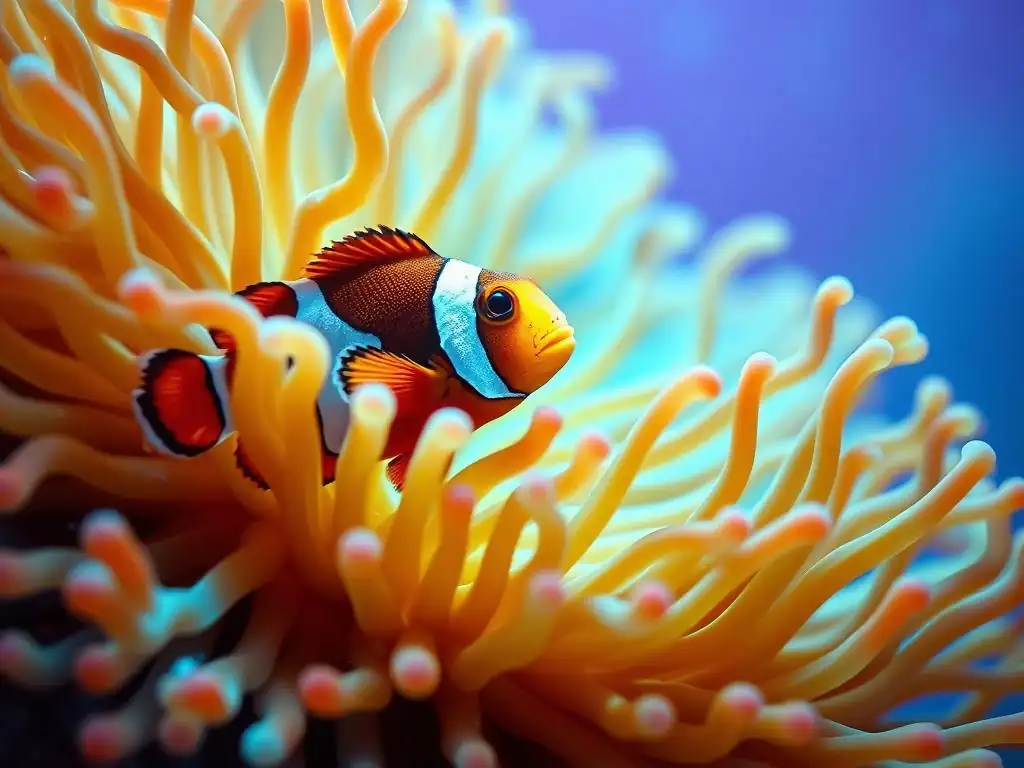
The life cycle of a clownfish, from egg to a reproductively mature adult, involves several distinct stages, each crucial for the ultimate goal of successful breeding. Fertilized eggs typically hatch within 7-10 days, depending on water temperature, emerging as tiny, planktonic larvae. These larvae are highly vulnerable and spend approximately 7-14 days drifting in the water column, feeding on microscopic organisms. During this pelagic stage, they undergo significant metamorphosis, developing their distinctive coloration and fin structures before settling onto a suitable substrate, often near an anemone.
Once settled, the young clownfish transition into the juvenile stage, rapidly growing and establishing their symbiotic relationship with an anemone or a surrogate host. Sexual maturity in clownfish is a gradual process, with individuals typically becoming reproductively active between 1.5 to 2.5 years of age, though some species may mature earlier or later. As protandrous hermaphrodites, all clownfish are born male. The largest and most dominant individual in a group will eventually transition into a female, forming a breeding pair with the next largest male, highlighting a unique aspect of clownfish spawning techniques success.
Identifying Mature Clownfish Ready for Breeding
Identifying clownfish that are mature and ready for breeding involves observing both their physical development and behavioral cues. Physically, a mature female clownfish will typically be noticeably larger than her male counterpart, often exceeding 3-4 inches in length, while the male might be around 2-3 inches. Their coloration will be vibrant, and their overall body condition should appear robust and healthy. The most telling physical sign in a female nearing spawning is a visibly swollen abdomen, indicating the presence of developing eggs, and a prominent ovipositor, a small tube that extends from her vent just prior to laying eggs.
Behaviorally, a compatible and mature breeding pair will exhibit distinct courtship rituals. These often include the male "dancing" or quivering around the female, flicking his fins, and meticulously cleaning a chosen spawning site, such as a rock, slate tile, or the base of an anemone.
The female may join in the cleaning, and the pair will remain in close proximity, often defending their territory from other tank inhabitants. Consistent observation of these behaviors over several days or weeks is a strong indicator that the pair is preparing for spawning, signaling that your clownfish spawning techniques success efforts are on the right track.
Key Factors Influencing Clownfish Spawning in Captivity
Achieving clownfish spawning success in a home aquarium hinges on carefully managing several interconnected environmental and biological factors. Paramount among these is stable and pristine water quality, including optimal temperature, salinity, and pH levels, which mimic their natural reef habitat conditions. Fluctuations in these parameters can cause stress, inhibiting reproductive activity. A dedicated breeding tank, free from aggressive tank mates, provides the secure and low-stress environment essential for a pair to bond and feel safe enough to reproduce.
Nutrition plays an equally critical role; a diet rich in high-quality, varied foods ensures the conditioning necessary for egg development and healthy sperm production. Furthermore, simulating natural light cycles, particularly a dawn-to-dusk progression, can act as a powerful trigger for spawning. The presence of a suitable spawning substrate, whether a flat rock, a piece of slate, or a terracotta pot, along with a host anemone or a suitable artificial surrogate, provides the necessary site for egg deposition and protection. Addressing these factors systematically is foundational to any successful clownfish spawning techniques success strategy.
Frequently Asked Questions
How crucial is water quality for successful clownfish spawning?
Water quality is absolutely critical. Stable parameters, including temperature, salinity, and pH, are essential for inducing spawning and ensuring fry survival.
What role does diet play in encouraging clownfish to spawn?
A varied and nutritious diet is vital. Offer a high-quality mix of frozen and live foods, rich in essential fatty acids, to promote reproductive health.
What are some key environmental factors that can trigger spawning?
Simulating natural environmental changes, such as slight temperature fluctuations or increased photoperiods, can often trigger spawning behavior in clownfish.
How important is the presence of a suitable spawning site?
Providing a clean, flat surface, like a ceramic tile or rock, is crucial. Clownfish need a secure and accessible location to deposit their eggs.
What steps should I take after clownfish have spawned to maximize fry survival?
Carefully remove the tile or rock with the eggs to a separate rearing tank. Maintain pristine water quality and provide appropriate food for the developing fry.
Final Reflection: The Symphony of Successful Spawning
The journey of inducing clownfish to spawn, as we've explored, is more than just a technical exercise; it's a testament to our understanding of and connection with the natural world. The meticulous application of proven techniques, from precise environmental control to nuanced dietary adjustments, underscores the delicate balance required to unlock the reproductive potential of these vibrant creatures. This pursuit, while seemingly niche, mirrors the broader challenges of conservation and responsible stewardship of our planet's biodiversity.
The ability to successfully replicate natural processes in a controlled environment speaks volumes about our capacity for observation, adaptation, and ultimately, respect for life. Witnessing the miracle of clownfish spawning firsthand is a deeply humbling experience, reinforcing the interconnectedness of all living things. In every walk with nature one receives far more than he seeks.
- John Muir. This quote encapsulates the profound rewards of engaging with the natural world, reminding us that the pursuit of knowledge is often intertwined with a deeper appreciation for the intricate beauty that surrounds us.
As you consider the insights shared in this article, I encourage you to reflect on the power of dedication and the importance of continuous learning. Whether you're an experienced aquaculturist or simply a curious observer, the principles of patience, precision, and unwavering commitment to ethical practices are universally applicable. Embrace the challenge, celebrate the small victories, and remember that every successful spawning is a step towards a greater understanding of the delicate dance of life.
Ignite the Spark: Make Your Clownfish a Family!
Thank you for diving deep into the world of clownfish breeding! Now that you're equipped with the knowledge to encourage spawning, it's time to take action and bring the magic of marine reproduction to your aquarium. Here are a few things you can do now:
- Immediately analyze and adjust your tank's water parameters following the guidelines discussed to perfectly mimic a spawning environment.
- Share this article with fellow reef enthusiasts who are dreaming of baby clownfish – spreading the knowledge helps build a thriving community.
- Document your journey! Start a breeding log to track changes, successes, and challenges – you might uncover new insights and become a clownfish spawning expert yourself.
What surprising element will you introduce to your tank to encourage spawning this week?