
Nano Reef Personalities: A Deep Dive into Goby, Blenny & Dragonet Behaviors

Welcome to Aquarium Mastery!
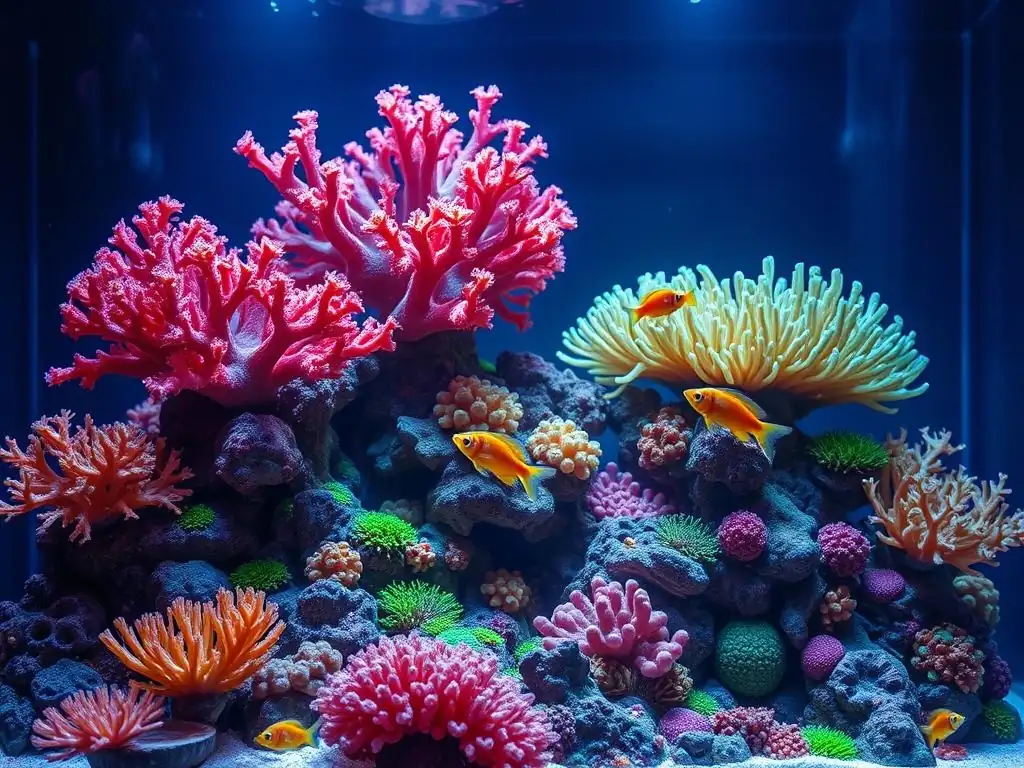
Ever wondered about the secret lives unfolding in your nano reef tank? Specifically, the quirky and captivating behaviors of your goby, blenny, and dragonet inhabitants? Dive in and explore our deep dive into Nano Reef Goby Behavior, unlocking the secrets to a thriving and harmonious miniature ecosystem. Learn what those subtle fin flicks really mean and how to create the perfect environment for these captivating characters. Ready to unravel the mysteries?
- Understanding Goby Behavior in Nano Reef Aquariums
- Exploring Blenny Behaviors in Nano Reef Tanks
-
Dragonet Behavior in Nano Reef Aquariums: A Challenging but Rewarding Addition
- Dragonets: The Majestic but Demanding Inhabitants of Nano Reefs
- Identifying Dragonet Species Suitable for Nano Reef Systems
- Dragonet Feeding Habits and Nutritional Needs in Confined Spaces
- Understanding Dragonet Compatibility with Other Nano Reef Fish
- Preventing and Managing Dragonet Behavioral Problems in Nano Reefs
- Comparing Goby, Blenny, and Dragonet Behaviors in Nano Reefs
- Optimizing Your Nano Reef for Healthy Goby, Blenny, and Dragonet Behavior
- Conclusion: Mastering Nano Reef Goby Behavior and Beyond
- Frequently Asked Questions
- Final Reflection: The Tiny Titans of Our Reefs
- Unveil Your Nano Reef's Hidden Charms!
Understanding Goby Behavior in Nano Reef Aquariums
Introduction to Nano Reef Gobies: Size, Temperament, and Compatibility
Nano reef gobies are a cornerstone of many small marine aquariums, prized for their manageable size, typically ranging from 1 to 4 inches, and their often peaceful demeanor. Their compact stature makes them ideal inhabitants for tanks as small as 10 to 20 gallons, where larger fish would quickly become stressed or overcrowded. These fascinating fish exhibit a wide array of behaviors, from active burrowing to meticulous substrate sifting, contributing significantly to the tank's ecosystem and visual appeal. Understanding their natural inclinations is crucial for successful integration into a diverse nano reef environment.
Their temperament generally leans towards the shy and non-aggressive, making them excellent candidates for community tanks alongside other similarly sized, peaceful invertebrates and fish. However, some species, particularly those that form burrows, can be territorial around their chosen dwelling. Compatibility is key; while they rarely bother corals or sessile invertebrates, care must be taken to avoid housing them with overly aggressive tank mates that could outcompete them for food or intimidate them into hiding. Observing the specific nano reef goby behavior of your chosen species will dictate optimal tank design and stocking choices.
Specific Goby Species for Nano Reefs: Behavioral Traits & Care
The Clown Goby (Gobiodon okinawae): A Peaceful Nano Reef Resident
The Clown Goby, Gobiodon okinawae, is a diminutive yet vibrant species, rarely exceeding 1.5 inches in length. These charming gobies are renowned for their tendency to perch directly on SPS corals such as Acropora and Montipora, using the coral's branches for shelter and observation points. Their peaceful disposition makes them excellent additions to coral-dominant nano reefs, where their bright yellow coloration provides a striking contrast against the corals. While they are known to occasionally nip at coral polyps, this behavior is typically minimal and rarely causes significant damage, especially in tanks with ample feeding.
Their unique perching behavior is a defining aspect of their nano reef goby behavior. Unlike many other gobies that dwell on the substrate, Clown Gobies spend most of their time nestled within coral branches, making them a captivating sight. They are quite hardy once acclimated, preferring stable water parameters within a salinity range of 1.023-1.026 and temperatures between 72-78°F. Providing multiple SPS colonies or similar branching structures is essential for their comfort and security, as it mimics their natural habitat and allows them to exhibit their characteristic perching behavior without stress.
The Yellow Watchman Goby (Cryptocentrus cinctus): Burrowing and Partnering Behavior
The Yellow Watchman Goby, Cryptocentrus cinctus, is a larger nano reef goby, typically reaching 3-4 inches. This species is celebrated for its symbiotic relationship with pistol shrimp, most notably the Tiger Pistol Shrimp ( Alpheus bellulus). The goby acts as the shrimp's "eyes," standing guard at the burrow entrance and signaling danger with a flick of its tail, prompting both to retreat into the shared burrow. This fascinating partnership is a highlight of observing nano reef goby behavior in action, offering a dynamic interaction rarely seen with other fish.
Their burrowing activity is extensive, requiring a sand bed of at least 2-3 inches in depth, ideally mixed with various grain sizes for stability. They are diligent sand sifters, constantly sifting through the substrate in search of small invertebrates and detritus, which helps keep the sand bed clean. While generally peaceful, they can be territorial around their burrow, especially if another goby or bottom-dwelling fish attempts to encroach. Providing stable rockwork directly on the tank bottom, rather than on the sand, is crucial to prevent rock slides caused by their excavation efforts.
The Hector's Goby (Koumansetta hectori): Algae Grazing Habits
The Hector's Goby, Koumansetta hectori, is a slender and active species, growing to about 2.5 inches, known for its distinctive horizontal stripes and its continuous grazing behavior. Unlike many other gobies that primarily feed on copepods or detritus, Hector's Gobies are voracious grazers of filamentous algae and diatoms. They constantly pick at live rock, glass, and even sand grains, making them a useful addition for minor algae control in a mature nano reef system. Their constant activity and unique feeding method provide an engaging example of specialized nano reef goby behavior.
Despite their active grazing, they are quite peaceful and can be shy, often darting into crevices when startled. They thrive in established tanks with ample live rock that provides a natural source of microalgae and plenty of hiding spots. While their primary diet is algae, it's advisable to supplement their feeding with high-quality spirulina flakes, marine pellets, or blanched nori to ensure they receive adequate nutrition, especially in tanks with limited natural algae growth. Ensuring a consistent food supply is critical for their long-term health and to prevent starvation in smaller, cleaner nano reef environments.
Deciphering Goby Communication: Body Language and Interactions
Understanding the subtle cues in goby body language is essential for discerning their well-being and social dynamics within a nano reef. Gobies, like many fish, communicate through a combination of fin movements, changes in coloration, and specific postures. For instance, a goby flaring its dorsal fin or displaying intensified colors often indicates territorial assertion or a display of dominance, particularly noticeable in species like the Yellow Watchman Goby defending its burrow. Conversely, clamped fins or faded coloration can be clear indicators of stress, illness, or submission to a more dominant tank mate.
Interactions with other tank inhabitants are also revealing. A peaceful nano reef goby behavior typically involves calm swimming, occasional substrate sifting, and minimal aggression towards non-competitors. However, if a goby repeatedly retreats into hiding, refuses to emerge for feeding, or constantly exhibits rapid, erratic movements, it might be experiencing undue stress from bullying, poor water quality, or insufficient hiding opportunities. Observing these behaviors closely allows aquarists to proactively address potential issues, ensuring a harmonious and healthy environment for their gobies and the entire nano reef community.
Common Goby Behavioral Problems in Nano Reefs and Solutions
Aggression Towards Tank Mates: Identifying and Resolving Conflicts
While many nano reef gobies are considered peaceful, certain species or individual fish can display aggression, particularly if conditions are suboptimal. This aggression often manifests as chasing, fin nipping, or territorial disputes over preferred hiding spots or feeding areas.
Common causes include overcrowding, insufficient rockwork to establish individual territories, or housing multiple gobies of the same or very similar species in a tank that is too small (e.g., two Watchman Gobies in a 20-gallon tank). For example, a single Yellow Watchman Goby might become overly territorial if it feels its burrow is threatened by a newly introduced bottom-dweller like a Royal Gramma.
Resolving such conflicts requires careful observation and intervention. If aggression is due to overcrowding, increasing the tank size or rehoming one of the aggressive individuals may be necessary. Providing ample rockwork with numerous caves, crevices, and visual barriers can help define territories and reduce direct confrontations. Ensuring a diverse feeding strategy that distributes food widely can also minimize competition at meal times. In some cases, temporarily removing the aggressor for a few days can help reset the social dynamic, allowing the other fish to establish themselves more confidently, and upon reintroduction, the aggressor may be less dominant.
Hiding Behavior: Understanding Stress and Providing Adequate Shelter
Persistent hiding is a common nano reef goby behavior problem, often indicating stress, fear, or an inadequate environment. When a normally active goby consistently remains out of sight, it could be due to a lack of sufficient hiding spots, bullying from larger or more aggressive tank mates, poor water quality, or the stress of a new environment. For instance, a newly introduced Hector's Goby might hide for several days if the tank lacks enough live rock with natural crevices, making it feel vulnerable to its new surroundings or existing inhabitants.
To alleviate excessive hiding, the primary solution is to enhance the aquascape with plenty of secure hiding places. This includes creating caves, overhangs, and crevices using live rock, or even providing specialized goby tubes. Ensuring that all tank mates are compatible and not overtly aggressive is crucial; if a specific bully is identified, rehoming them might be necessary.
Maintaining stable and optimal water parameters (e.g., ammonia 0 ppm, nitrite 0 ppm, nitrate <10 ppm, salinity 1.025) reduces environmental stress. A gradual acclimation process upon introduction, such as drip acclimation over 45-60 minutes, also significantly minimizes initial stress and encourages the goby to explore its new home more quickly.
Exploring Blenny Behaviors in Nano Reef Tanks
Blennies: The Algae-Eating Machines of Nano Reefs
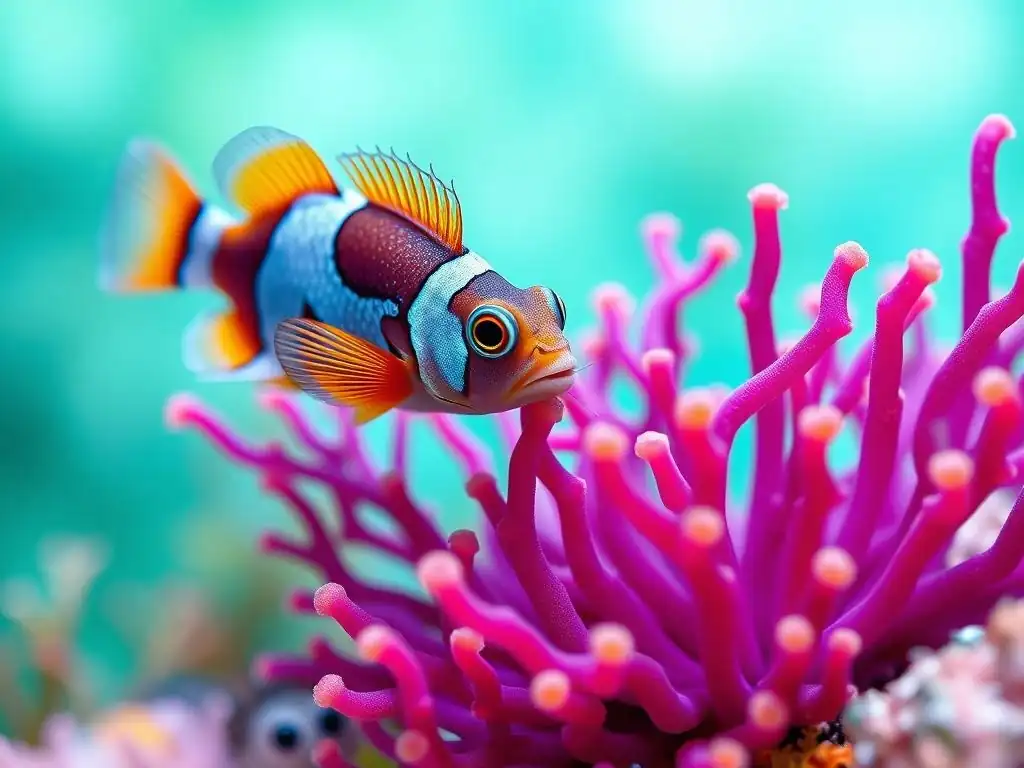
Blennies are a diverse group of fish, many of which are highly valued in nano reef aquariums for their distinctive personalities and their remarkable ability to consume nuisance algae. Species like the Bicolor Blenny or Tailspot Blenny are constantly grazing on filamentous algae, diatoms, and cyanobacteria from live rock, glass, and even sand. This makes them a natural, biological solution for maintaining a cleaner tank environment, reducing the need for manual scrubbing. Their specialized comb-like teeth are perfectly adapted for scraping off various forms of microalgae, contributing significantly to tank health.
Beyond their practical utility, blennies exhibit captivating behaviors that add dynamic interest to a nano reef. Many species are bold and curious, often perching on prominent rocks or even the tank glass, observing their surroundings with their characteristic large eyes. Their unique way of "hopping" or "walking" across surfaces, using their pectoral fins, is a charming trait. While their primary diet is algae, supplemental feeding with quality marine pellets, spirulina flakes, and blanched nori is often necessary, especially in newer or very clean tanks where natural algae sources might be insufficient.
Different Blenny Species and Their Unique Behaviors
The Bicolor Blenny (Ecsenius bicolor): Territory Defense and Algae Consumption
The Bicolor Blenny, Ecsenius bicolor, typically grows to about 4 inches and is easily recognized by its distinctive two-toned coloration, usually dark brown or black in the front half and orange or yellow in the rear. This blenny is an excellent algae grazer, spending much of its day meticulously picking at surfaces for microalgae.
However, it is also known for its strong territorial instincts. While generally peaceful towards other tank mates, a Bicolor Blenny will often claim a specific rock or cave as its home and may aggressively defend it against other blennies or similarly shaped fish that venture too close.
Their territorial behavior is a prominent aspect of their personality. They will perch on their chosen rock, often darting out to nip at perceived intruders before retreating back to their spot. This makes it challenging to keep multiple Bicolor Blennies or even other blenny species in a nano reef unless the tank is exceptionally large (e.g., 50+ gallons) with numerous distinct territories. Providing ample rockwork with many caves and crevices can help mitigate aggression by allowing each fish to establish its own secure space.
The Tailspot Blenny (Ecsenius stigmatura): Peaceful Grazing and Hiding Spots
The Tailspot Blenny, Ecsenius stigmatura, is a smaller and arguably more peaceful blenny, typically reaching about 2.5 inches. Its endearing personality and striking coloration, featuring a distinctive black spot at the base of its caudal fin, make it a popular choice for nano reef enthusiasts. Unlike the Bicolor Blenny, the Tailspot Blenny is far less territorial and generally coexists well with a wider variety of tank mates, including other small, peaceful bottom-dwellers, provided sufficient space and hiding spots are available.
This blenny spends its days actively grazing on various types of algae found on live rock and tank surfaces. Its small size allows it to navigate intricate rockwork, constantly searching for food. When startled or feeling threatened, the Tailspot Blenny will quickly dart into a crevice or small hole within the rockwork, showcasing its reliance on secure hiding spots. Providing a well-structured aquascape with numerous bolt-holes and plenty of established live rock is crucial for their well-being and to encourage their natural grazing behavior.
The Midas Blenny (Ecsenius midas): Swimming Behavior and Social Interactions
The Midas Blenny, Ecsenius midas, stands out from other blennies with its vibrant golden-yellow coloration and more active swimming behavior. While most blennies are bottom-dwellers that "perch" or "hop" across surfaces, the Midas Blenny spends a significant amount of time swimming in the water column, often hovering gracefully above the rockwork. This unique swimming style, reminiscent of a dartfish, makes it a dynamic and eye-catching addition to a nano reef, reaching up to 5 inches in length.
Despite its active swimming, the Midas Blenny still requires access to plenty of live rock with hiding spots, as it will quickly retreat into a crevice if startled. Socially, they are generally peaceful, though they can be aggressive towards conspecifics or other blennies if the tank is too small (under 30 gallons) or lacks sufficient territories. In larger nano reefs (30+ gallons), a single Midas Blenny can be a stunning focal point, interacting peacefully with a diverse range of small fish and invertebrates, adding both color and fluid motion to the aquarium.
Blenny social dynamics in nano aquariums are largely dictated by species and individual temperament, but a general principle holds true: most blennies are highly territorial, especially towards their own kind or similarly shaped fish. In a small aquarium, attempting to house multiple blennies of the same species, or even different species that occupy similar niches (e.g., two Ecsenius genus blennies), often leads to aggressive confrontations. A Bicolor Blenny, for example, will typically assert dominance over a Tailspot Blenny if they are forced to share a limited number of hiding spots within a 20-gallon tank.
Establishing a clear hierarchy or, more commonly, ensuring only one blenny is kept per nano tank, is the most effective strategy for compatibility. If a mixed-species blenny tank is desired, it typically requires a much larger aquarium (e.g., 50 gallons or more) with extensive, well-structured rockwork providing numerous distinct territories. Introducing them simultaneously or introducing the most peaceful species first can sometimes mitigate aggression, but success is not guaranteed. Ultimately, observing individual blenny behavior and being prepared to separate incompatible individuals is crucial for maintaining a peaceful nano reef environment.
Addressing Blenny Behavioral Issues in Nano Reef Environments
Over-Aggression: Managing Territorial Disputes
Over-aggression in blennies, particularly territorial species like the Bicolor Blenny, is a common behavioral issue in nano reef environments. This aggression often stems from insufficient space, a lack of adequate hiding spots, or competition for resources. A blenny might constantly chase other bottom-dwelling fish, nip at fins, or relentlessly guard a specific rock or cave, causing stress to other tank inhabitants. For example, a Midas Blenny in a 20-gallon tank might harass a Clown Goby simply because it perceives the goby as a competitor for its favored perching spots.
To manage over-aggression, several strategies can be employed. The most effective is to provide an abundance of live rock with multiple caves, crevices, and visual barriers, allowing each fish to establish its own territory. If the tank is too small for the blenny's natural territorial range (e.g., a Bicolor Blenny in a 10-gallon tank), upgrading to a larger aquarium (e.g., 20-30 gallons minimum) is often necessary.
Rearranging the rockwork can sometimes disrupt established territories and reduce aggression. In extreme cases, if a blenny consistently bullies tank mates to the point of stress or injury, rehoming the aggressive individual might be the only viable solution.
Nutritional Deficiencies: Ensuring Adequate Algae and Supplementation
Another significant behavioral issue in blennies, particularly obligate grazers, is lethargy or a lack of activity caused by nutritional deficiencies. While blennies are excellent algae eaters, a nano reef, especially a newer or very clean one, may not produce enough natural algae to sustain them. This can lead to a blenny becoming thin, less active, and exhibiting faded coloration as it struggles to find sufficient food. A Tailspot Blenny in a tank with minimal algae growth, for instance, might spend all its time picking at barren rock, rather than exhibiting its usual active grazing behavior.
To ensure adequate nutrition, consistent supplementation is vital. High-quality spirulina flakes, marine pellets, and blanched nori (seaweed sheets) should be offered regularly, typically 2-3 times a day. Attaching nori to a veggie clip allows the blenny to graze throughout the day, mimicking its natural feeding pattern. Cultivating a healthy population of microalgae by ensuring adequate lighting and feeding the tank appropriately can also help. Monitoring the blenny's body condition and activity level is crucial; a plump, active blenny with vibrant coloration is a sign of good health and proper nutrition.
Dragonet Behavior in Nano Reef Aquariums: A Challenging but Rewarding Addition
Dragonets: The Majestic but Demanding Inhabitants of Nano Reefs
Dragonets, with their vibrant colors, intricate patterns, and unique "walking" movements across the substrate, are undeniably majestic additions to any reef tank. However, their specialized feeding habits make them one of the more challenging inhabitants for a nano reef aquarium. Unlike many fish that readily accept prepared foods, dragonets are primarily micropredators, relying almost exclusively on a constant supply of live copepods and other small invertebrates found grazing on live rock and in the sand bed. Their slow, deliberate feeding style means they cannot compete effectively with faster, more aggressive feeders.
Despite the challenges, the reward of observing a healthy dragonet's graceful movements and meticulous hunting behavior is immense. They typically grow to about 2-3 inches, making them physically suitable for tanks as small as 15-20 gallons, but their dietary requirements necessitate a well-established, mature ecosystem. Success with dragonets in nano reefs hinges on creating an environment that can sustain a thriving population of their natural prey, making careful planning and consistent monitoring of their feeding crucial.
Identifying Dragonet Species Suitable for Nano Reef Systems
The Ocellaris Dragonet (Synchiropus ocellatus): Copepod Consumption and Acclimation
The Ocellaris Dragonet, Synchiropus ocellatus, often referred to as the Scooter Blenny (though not a true blenny), is a popular choice for nano reefs due to its relatively smaller size, typically reaching 2-3 inches. These dragonets are primarily copepod consumers, meticulously picking off tiny crustaceans from every surface of the live rock and sand. Their survival in a nano reef is directly tied to the tank's ability to maintain a robust and continuous supply of these micro-invertebrates.
Acclimation for Ocellaris Dragonets is particularly critical due to their delicate nature and specific dietary needs. A slow drip acclimation over 1-2 hours is highly recommended to minimize stress from changes in water parameters. Upon introduction, they may initially be shy, but a healthy individual will quickly begin to graze on surfaces. Ensuring the tank has been established for at least 6 months, ideally with a refugium to culture copepods, significantly increases their chances of long-term survival. Observing their constant grazing behavior is a key indicator of their health and adequate food supply.
The Ruby Red Dragonet (Synchiropus cf. splendidus): Specialized Diet and Tank Maturity
The Ruby Red Dragonet, Synchiropus cf. splendidus (often sold as a variant of the Green Mandarin Dragonet), is perhaps the most sought-after dragonet for nano reefs due to its breathtaking crimson coloration and intricate patterns. While visually stunning, it shares the same highly specialized diet as other dragonets, relying almost entirely on a continuous supply of live copepods. They typically grow to about 2.5 inches, making them physically suitable for tanks 20 gallons and larger, but their feeding habits demand an exceptionally mature and stable system.
Tank maturity is paramount for the Ruby Red Dragonet. A tank should be established for at least 9-12 months, allowing ample time for a diverse and abundant copepod population to flourish within the live rock and substrate. Without a constant, self-sustaining source of live food, these dragonets will slowly starve. They are notoriously difficult to train onto prepared foods, though some individuals may eventually accept frozen cyclops or enriched brine shrimp. Their slow, methodical hunting requires a peaceful environment where they are not outcompeted by faster-feeding tank mates.
Dragonet Feeding Habits and Nutritional Needs in Confined Spaces
Dragonets possess a highly specialized feeding strategy, relying almost exclusively on live copepods and other small benthic invertebrates that inhabit the live rock and sand bed. They are visual hunters, meticulously scanning surfaces and ambushing their microscopic prey with quick, precise strikes.
This unique feeding habit makes them particularly challenging to keep in confined nano reef spaces, where the natural copepod population can be quickly depleted. Unlike many reef fish that graze on algae or readily accept prepared foods, dragonets have a very slow metabolism and will starve if they cannot find a continuous supply of their preferred live food.
To meet their nutritional needs in a nano reef, a robust copepod population is essential. This often necessitates the establishment of a refugium, a separate chamber or tank plumbed into the main display, where copepods can breed and multiply without predation.
Dosing the tank with commercially available live copepod cultures on a weekly or bi-weekly basis is also crucial, especially in smaller tanks without a dedicated refugium. Even with these measures, it's important to monitor the dragonet's body condition closely; a healthy dragonet will appear plump and constantly active in its search for food, while a thin or lethargic one indicates insufficient nutrition.
Understanding Dragonet Compatibility with Other Nano Reef Fish
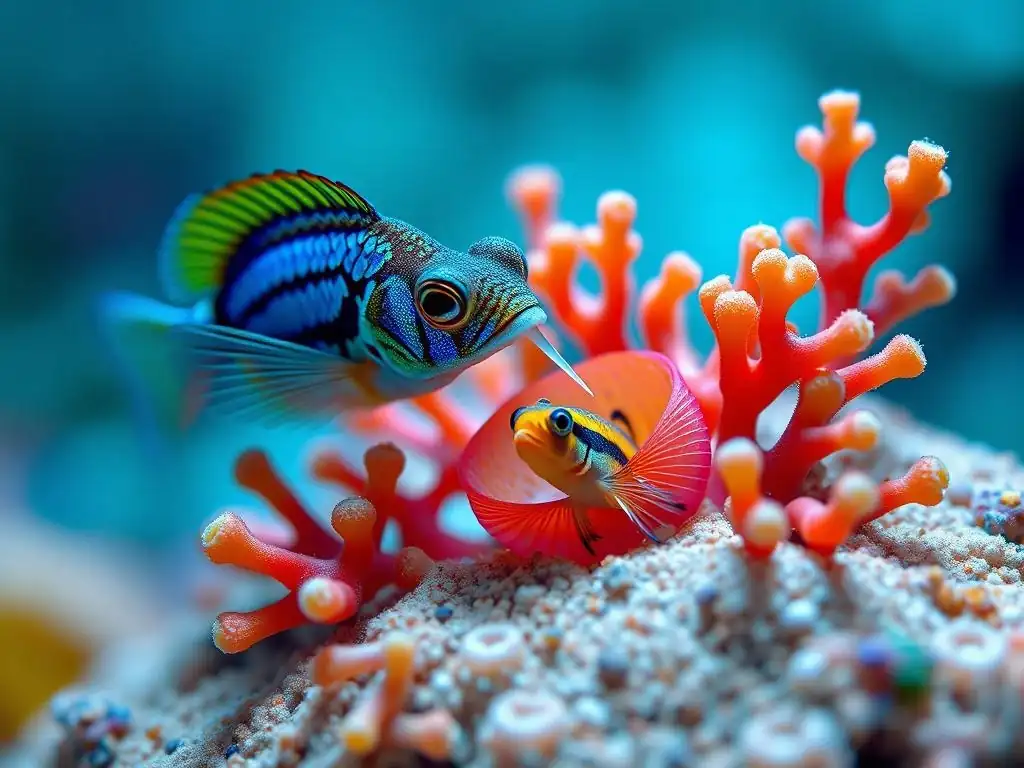
Dragonet compatibility in a nano reef is heavily influenced by their delicate feeding habits and shy nature. They are generally peaceful towards other fish and invertebrates, posing no threat to corals or sessile life. However, the primary compatibility concern lies in ensuring they are not outcompeted for their specialized live food source. Fast-moving, aggressive feeders will quickly consume any available copepods before a slow-moving dragonet even has a chance. For example, a Six-line Wrasse, while small, is an extremely efficient copepod hunter and would quickly starve a dragonet in a 20-gallon tank.
Ideal tank mates for dragonets in a nano reef are peaceful, slow-moving fish that do not share the same dietary niche. This includes small gobies that primarily sift sand (like the Diamond Watchman Goby, if the tank is large enough for its needs) or perch on corals, certain blennies that are primarily algae grazers, and various peaceful invertebrates such as snails, hermit crabs, and cleaner shrimp.
Avoid species like other wrasses, damselfish, or even aggressive clownfish that can intimidate or outcompete the dragonet. A single dragonet in a mature, copepod-rich nano reef with carefully selected tank mates offers the best chance for long-term success.
Preventing and Managing Dragonet Behavioral Problems in Nano Reefs
Starvation: Ensuring a Stable Copepod Population
Starvation is the most critical and common behavioral problem observed in dragonets within nano reef aquariums. This occurs when the tank's natural copepod population is insufficient to sustain the dragonet's constant feeding needs, leading to a slow decline in health, lethargy, and eventually death. A dragonet that is constantly picking at barren rock, appears thin, or shows a lack of interest in its surroundings is likely starving. For instance, a Ruby Red Dragonet in a 15-gallon tank that has only been set up for three months will almost certainly starve due to an immature and insufficient copepod population.
Preventing starvation requires proactive measures. The tank must be well-established, ideally for 6-12 months, to allow a robust copepod population to flourish. A refugium plumbed into the main display is highly recommended, as it provides a safe breeding ground for copepods away from predation.
Regular dosing of live copepod cultures (e.g., 5280 Pods or Tisbe pods) on a weekly or bi-weekly basis is essential, especially in smaller nano tanks without a refugium. Cultivating beneficial macroalgae like Chaetomorpha in the display or refugium can also provide additional habitat and food sources for copepods, thereby ensuring a stable and continuous supply for the dragonet.
Bullying from Tank Mates: Creating a Stress-Free Environment
While dragonets are generally peaceful, their slow feeding habits and shy nature make them highly susceptible to bullying or competition from more aggressive or faster-feeding tank mates. Constant harassment can lead to a dragonet hiding excessively, refusing to come out to feed, or displaying signs of stress such as faded coloration or clamped fins. A dragonet that is constantly chased by a damsel or unable to get to food before a wrasse consumes it will quickly become stressed and malnourished.
To create a stress-free environment, careful tank mate selection is paramount. Avoid introducing any fish that are known to be aggressive, highly territorial, or extremely efficient copepod predators. This includes many species of wrasses (e.g., Six-line Wrasse, Melanurus Wrasse), most damselfish, and even some faster-moving gobies.
Instead, opt for truly peaceful, slow-moving fish that occupy different ecological niches, such as small, non-competitive gobies (e.g., small Clown Gobies), certain blennies (e.g., Tailspot Blenny), and various peaceful invertebrates. Providing ample live rock with numerous hiding spots and visual barriers also allows the dragonet to retreat if it feels threatened, minimizing direct confrontations and promoting its natural, unhurried feeding behavior.
Comparing Goby, Blenny, and Dragonet Behaviors in Nano Reefs
Feeding Strategies: Algae Grazing vs. Copepod Consumption vs. Omnivorous Diets
The diverse feeding strategies of gobies, blennies, and dragonets are a primary factor in their suitability and successful integration into nano reef aquariums. Blennies, particularly species like the Bicolor Blenny and Tailspot Blenny, are predominantly herbivorous, acting as diligent algae grazers. They spend their days meticulously scraping microalgae and diatoms from live rock and tank surfaces, making them valuable members of the clean-up crew. While they may accept some prepared foods, their natural role is that of an algae-eating machine, benefiting from mature tanks with established algal growth.
Gobies exhibit a more varied diet, ranging from omnivorous sand-sifters like the Yellow Watchman Goby, which sifts through substrate for detritus and small invertebrates, to more specialized feeders like the Hector's Goby, which actively grazes on microalgae and diatoms. Many gobies are also micro-carnivores, consuming copepods, amphipods, and other tiny crustaceans found in the water column or on surfaces. This adaptability in diet makes many goby species less challenging to feed than dragonets, as they often readily accept a mix of frozen foods (e.g., mysis shrimp, brine shrimp) and high-quality pellets.
Dragonets, exemplified by the Ocellaris and Ruby Red Dragonets, are at the most specialized end of the spectrum. They are almost exclusively micropredators, relying entirely on a constant, abundant supply of live copepods and other minute benthic invertebrates. Their slow, deliberate hunting style means they are poor competitors for prepared foods and require a very mature, copepod-rich tank. This specialized diet is the single biggest factor dictating their success or failure in a nano reef, requiring diligent husbandry focused on maintaining their live food source, distinguishing their needs significantly from the more versatile gobies and blennies.
The social interactions and compatibility of gobies, blennies, and dragonets vary significantly, directly impacting successful tank mate selection in a nano reef. Blennies, especially those in the Ecsenius genus (e.g., Bicolor Blenny), are often highly territorial towards conspecifics and similarly shaped fish. They will fiercely defend their chosen perching spots or caves, leading to aggression if multiple blennies are housed in a small tank without ample defined territories. While generally peaceful towards dissimilar fish, their territoriality can cause stress to other bottom-dwellers if not managed with sufficient space and rockwork.
Gobies, on the other hand, display a broader range of social behaviors. Many nano reef goby species, such as the Clown Goby, are exceptionally peaceful and show little to no aggression towards tank mates, often coexisting well with other non-competitive fish.
Burrowing gobies like the Yellow Watchman Goby can be territorial around their burrow entrance, but this aggression is typically limited to keeping other bottom-dwellers at a respectful distance rather than active chasing. Some goby species can be kept in pairs if the tank is adequately sized, but most are best kept as single specimens in smaller nano reefs to avoid intraspecific conflict.
Dragonets are generally the most peaceful of the three groups in terms of direct aggression towards other fish. They are non-aggressive and pose no threat to corals or invertebrates. Their primary social challenge lies in their extreme vulnerability to competition for food.
They are slow, deliberate feeders and cannot compete with faster, more active tank mates for their specialized copepod diet. Therefore, their compatibility is less about physical aggression and more about ensuring that other inhabitants do not outcompete them for food or intimidate them into hiding, making the selection of truly peaceful, non-competitive tank mates paramount for their survival.
Environmental Needs: Habitat Preferences and Tank Setup Considerations
The environmental needs and preferred habitats of gobies, blennies, and dragonets dictate specific tank setup considerations for a thriving nano reef. Blennies, with their perching and grazing habits, thrive in tanks with abundant live rock that offers numerous surfaces for algae growth and a multitude of crevices and caves for hiding. Species like the Bicolor Blenny require prominent, individual perching spots to establish their territory, while the Tailspot Blenny benefits from intricate rockwork with many small bolt-holes for quick retreats. A mature tank with established algae is beneficial for their grazing needs.
Gobies exhibit more diverse habitat preferences. Sand-sifting gobies, such as the Yellow Watchman Goby, require a deep sand bed (at least 2-3 inches) to facilitate their burrowing activities. The stability of their burrows is enhanced by placing live rock directly on the tank bottom glass before adding sand. Other gobies, like the Clown Goby, prefer branching corals or sponge structures for perching. Regardless of specific preference, all gobies benefit from ample rockwork that provides varied textures, hiding spots, and visual barriers, contributing to a secure environment that encourages natural nano reef goby behavior.
Dragonets, while physically small, demand a highly mature and ecologically rich environment. Their survival is entirely dependent on a thriving population of live copepods, which primarily reside within the porous structure of live rock and the sand bed. Therefore, a mature tank (minimum 6-9 months old, ideally 12+ months) with a substantial amount of cured live rock (e.g., 1-1.5 lbs per gallon) and a well-established sand bed is crucial.
A refugium is often considered almost a necessity to continuously culture copepods. Without these specific environmental conditions that foster a robust micro-fauna, dragonets will not thrive, making their habitat requirements the most stringent of the three groups.
Optimizing Your Nano Reef for Healthy Goby, Blenny, and Dragonet Behavior
Tank Size and Aquascaping: Creating a Natural and Stress-Free Environment
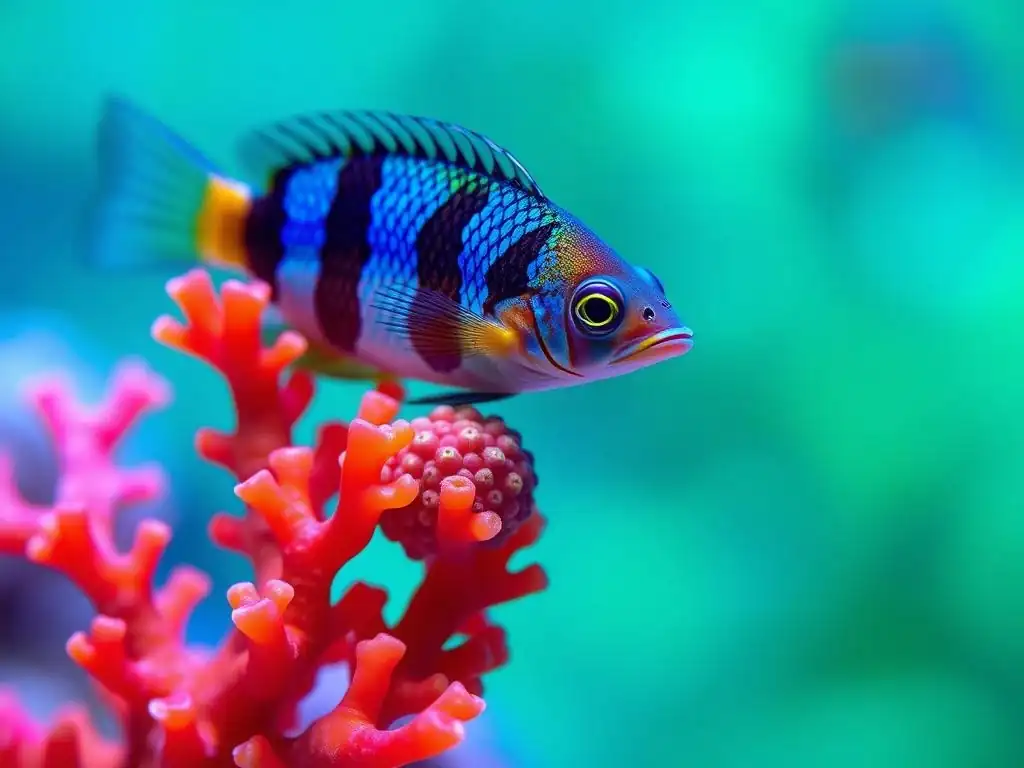
Optimizing tank size and aquascaping is fundamental to fostering healthy goby, blenny, and dragonet behavior in a nano reef. For most nano reef gobies and blennies, a minimum tank size of 10-20 gallons is generally sufficient, provided there is adequate live rock.
However, for species with stronger territorial instincts, like the Bicolor Blenny, or those forming symbiotic relationships, such as the Yellow Watchman Goby with a pistol shrimp, a 20-30 gallon tank offers significantly more space to establish territories and reduce potential conflicts. Dragonets, while small, ideally benefit from 20 gallons or more due to their stringent dietary needs and the requirement for a larger copepod population.
Aquascaping plays a critical role in creating a natural and stress-free environment. Incorporate ample live rock, aiming for at least 1-1.5 pounds per gallon, arranged to form numerous caves, crevices, overhangs, and visual barriers. This provides essential hiding spots, perching locations, and territorial boundaries crucial for blennies and gobies.
For burrowing gobies, ensure that the rockwork is stable and rests directly on the tank bottom, with a sand bed of at least 2-3 inches. For dragonets, intricate rockwork offers more surface area for copepod growth and foraging. A well-designed aquascape mimics their natural habitat, reducing stress and encouraging their natural behaviors, including observing nuanced nano reef goby behavior patterns.
Water Parameters and Maintenance: Ensuring Optimal Water Quality
Maintaining optimal water parameters and adhering to a consistent maintenance schedule are paramount for the health and natural behavior of gobies, blennies, and dragonets in a nano reef. Stable water quality minimizes stress, strengthens their immune systems, and allows them to thrive. Key parameters to monitor rigorously include salinity (1.024-1.026 specific gravity), temperature (72-78°F), pH (8.0-8.4), alkalinity (7-12 dKH), calcium (400-450 ppm), and magnesium (1200-1400 ppm). Ammonia and nitrite should always be undetectable (0 ppm), and nitrates kept as low as possible, ideally below 10 ppm.
Regular maintenance is crucial. Weekly water changes of 10-20% replenish trace elements and remove accumulated nitrates and other pollutants. Using high-quality RO/DI water for all top-offs and water changes prevents the introduction of unwanted contaminants. Consistent cleaning of the substrate and glass, along with proper filtration (e.g., protein skimmer, media reactor with carbon and GFO), helps maintain pristine water conditions. Monitoring these parameters and following a strict maintenance regimen directly contributes to the long-term health and vibrant display of natural goby, blenny, and dragonet behaviors, ensuring they remain active, colorful, and free from stress-induced issues.
Choosing Compatible Tank Mates: Avoiding Aggression and Competition
Selecting compatible tank mates is one of the most critical aspects of optimizing a nano reef for healthy goby, blenny, and dragonet behavior, directly impacting their stress levels, feeding success, and overall well-being. The primary goal is to avoid aggression and direct competition for food and territory. For gobies and blennies, this means steering clear of overly aggressive species like many damselfish, larger wrasses, or territorial clownfish that might bully or outcompete them for resources. For example, a single aggressive Yellowtail Damselfish in a 20-gallon tank can terrorize smaller, peaceful gobies and blennies.
For dragonets, compatibility is even more stringent, focusing almost entirely on avoiding competition for their specialized live copepod diet. Fast-moving, efficient copepod hunters such as Six-line Wrasses, Leopard Wrasses, or even some active gobies (like Rainford's Goby) should be strictly avoided, as they will quickly deplete the dragonet's food source, leading to starvation.
Instead, opt for truly peaceful, slow-moving fish that occupy different ecological niches, such as small, non-competitive gobies (e.g., Clown Gobies), certain peaceful blennies (e.g., Tailspot Blennies), and various reef-safe invertebrates like snails, hermit crabs, and cleaner shrimp. Thoughtful tank mate selection ensures a harmonious environment where all inhabitants can thrive and exhibit their natural behaviors without undue stress or competition.
Conclusion: Mastering Nano Reef Goby Behavior and Beyond
Key Takeaways for Successful Nano Reef Keeping with Gobies, Blennies, and Dragonets
Successfully keeping gobies, blennies, and dragonets in a nano reef hinges on a deep understanding of their individual behaviors and specific environmental needs. The primary takeaway is that while physically small, these fish demand tailored care. Gobies offer diverse behaviors from sand-sifting to perching, often displaying fascinating symbiotic relationships, and benefit from varied aquascaping and stable water.
Blennies are invaluable algae grazers with unique personalities, though some can be territorial, requiring ample hiding spots and careful tank mate selection. Dragonets, while visually stunning, are the most challenging due to their absolute reliance on a continuous, abundant supply of live copepods, making tank maturity and refugiums crucial.
Ultimately, mastering nano reef goby behavior, alongside that of blennies and dragonets, requires diligent observation, precise water parameter maintenance, and thoughtful aquascaping that caters to their natural instincts. Providing species-specific diets, ensuring ample hiding spots, and selecting compatible tank mates are not just recommendations but necessities for their long-term health and the prevention of stress-induced behavioral issues. By prioritizing these elements, aquarists can create thriving, dynamic nano reef ecosystems that allow these captivating fish to display their full range of natural behaviors, enriching the entire aquarium experience.
Resources for Further Learning About Nano Reef Fish Behavior
For those passionate about delving deeper into the intricate world of nano reef fish behavior, several avenues for further learning exist beyond this article. Consulting comprehensive marine aquarium reference books remains an invaluable resource, often providing detailed species profiles, specific care requirements, and insights into their natural behaviors and social structures. Many reputable online forums and communities dedicated to saltwater aquariums offer platforms for direct interaction with experienced aquarists, allowing for real-time questions, sharing of observations, and troubleshooting specific behavioral challenges encountered with gobies, blennies, and dragonets.
Additionally, academic journals and scientific publications, while sometimes dense, can offer cutting-edge research on fish ethology and ecology, providing a deeper understanding of the underlying biological drivers of nano reef goby behavior and other species. Finally, visiting local fish stores that specialize in saltwater fish can provide opportunities to observe these fish firsthand, discuss their care with knowledgeable staff, and gain practical advice. Continuous learning and active engagement with the aquarist community are key to refining your understanding and fostering the best possible environment for these unique and rewarding nano reef inhabitants.
Frequently Asked Questions
What makes Nano Reef Gobies popular choices for small aquariums?
Nano Reef Gobies are popular because of their small size, typically staying under 2 inches, making them suitable for nano reef tanks. They also exhibit interesting behaviors and are generally peaceful towards other reef inhabitants.
Are all Nano Reef Gobies reef-safe?
While most are considered reef-safe, some species may nip at corals or disturb invertebrates. It's crucial to research specific species before introducing them to your reef to ensure compatibility and avoid coral damage.
What type of diet do Nano Reef Gobies require?
Most Nano Reef Gobies are carnivores and require a diet of small meaty foods. They should be fed a variety of foods like frozen mysis shrimp, brine shrimp, and copepods to maintain optimal health and coloration.
How do Nano Reef Gobies interact with other fish in the aquarium?
Generally, Nano Reef Gobies are peaceful but can be territorial towards their own kind. It's best to keep only one per tank unless it's a mated pair or the aquarium is large enough to accommodate multiple territories, preventing aggression and stress.
What are some common signs of stress in Nano Reef Gobies?
Signs of stress include hiding excessively, refusing to eat, rapid breathing, and fading color. These symptoms could indicate poor water quality, bullying from tank mates, or disease, requiring immediate attention.
Final Reflection: The Tiny Titans of Our Reefs
The intricate world of nano reef aquariums, often overlooked for their diminutive size, mirrors the vastness of the ocean in its complexity. Understanding the unique behaviors of its inhabitants, particularly the nano reef goby, is not just about successful husbandry; it’s about appreciating the delicate ecosystems we strive to recreate within our homes. This knowledge, now more accessible than ever, empowers us to become better stewards of these miniature underwater worlds.
The captivating personalities of gobies, blennies, and dragonets remind us that even the smallest creatures possess intricate lives worthy of our attention and respect. Cultivating a deeper understanding of their needs and behaviors fosters a more enriching and sustainable reef-keeping experience. In the end, we will conserve only what we love; we will love only what we understand; and we will understand only what we are taught.
- Baba Dioum's words resonate deeply, urging us to continue learning and sharing our knowledge to inspire a greater appreciation for these fascinating animals.
As you observe your own nano reef, take a moment to truly connect with the tiny titans that call it home. Consider how your actions, informed by a deeper understanding of their behavior, can contribute to their well-being and the overall health of your ecosystem. Let the lessons learned from these gobies, blennies, and dragonets inspire you to cultivate a more mindful and compassionate approach to all living things, both within and beyond the glass walls of your aquarium.
Thank you for exploring the fascinating world of nano reef inhabitants! We hope you've gained a deeper appreciation for the unique personalities of gobies, blennies, and dragonets. Now, let's bring that knowledge to life!
Here are a few ways to dive deeper:
- Identify the Prime Resident: Dedicate some time to keenly observing your aquarium to find which fish species is the most suitable and would thrive in your aquarium based on all the species you have.
- Explore a wider variety of nano reef-safe species that complement your current setup. Research unconventional tankmates!
- Share your experiences and observations of goby, blenny, or dragonet behavior in our Aquarium Mastery community forum to enrich everyone's understanding.
What unique personality trait have you observed in your nano reef inhabitants that surprised you the most?