The Importance of Live Rock for Saltwater Angelfish Health & Behavior
🌟 Enhance your saltwater aquarium with live rock to boost angelfish health and promote natural behavior. AquariumMastery.com offers expert guidance on creating…
Read article
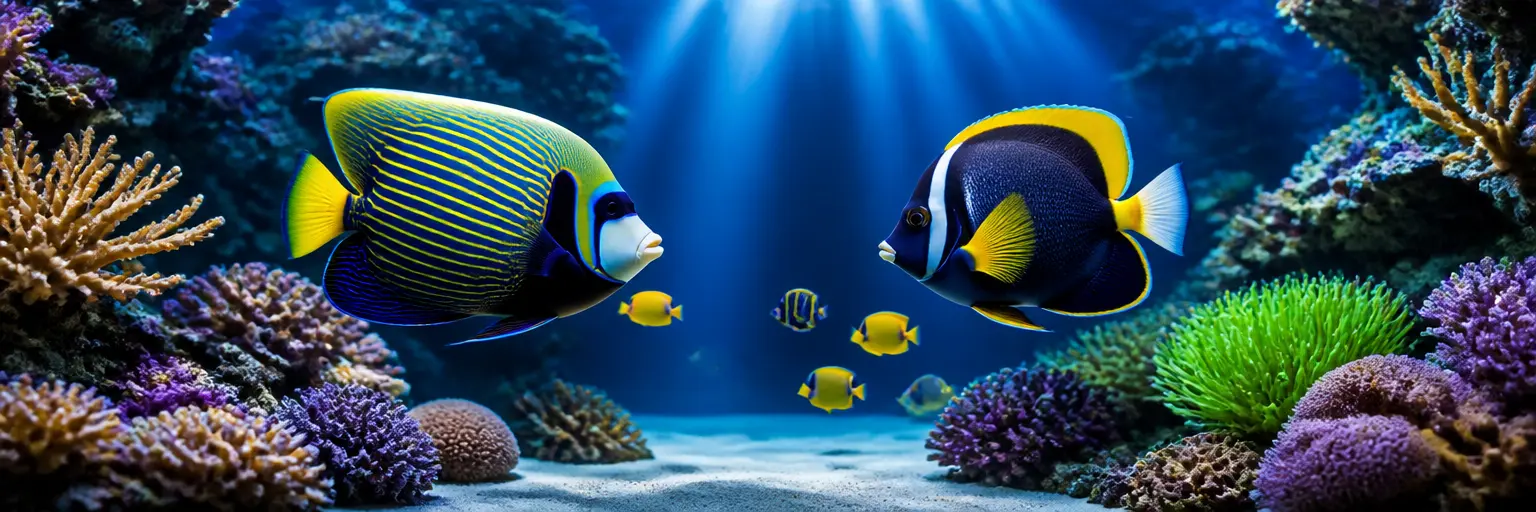
Discover saltwater angelfish with expert species profiles, reef-safety guidance, and practical care advice for both large and dwarf varieties. 🐠 Learn about tank size, water parameters, diet, temperament, compatibility, acclimation, and health so you can choose the right angelfish for your marine aquarium. Whether you’re planning a fish-only system or a reef tank, Aquarium Mastery helps you create a thriving, balanced habitat with confidence. 🌊
🌟 Enhance your saltwater aquarium with live rock to boost angelfish health and promote natural behavior. AquariumMastery.com offers expert guidance on creating…
Read article
🌊 Ensure your saltwater angelfish thrive by mastering precise saltwater angelfish water parameters. Proper water chemistry, stability, and regular maintenance are essential…
Read article
🐠 Discover the essential Angelfish tank compatibility guide to help you successfully keep multiple angelfish together. Learn key tips on tank setup,…
Read article
🌟 Discover essential healthy saltwater angelfish buying tips to ensure vibrant, thriving fish in your home aquarium. AquariumMastery.com offers expert guidance on…
Read article
🌊 Discover the stunning Majestic Angelfish, a true showstopper for saltwater aquariums. This guide on Angelfish care saltwater aquarium offers expert tips…
Read article
🐠 Beware of angelfish buying red flags—such as faded colors, frayed fins, or lethargy—that indicate health issues. Recognizing these warning signs ensures…
Read article
🌊 Ensure the health of your new saltwater angelfish with our comprehensive saltwater angelfish quarantine protocol, guiding you step-by-step to prevent disease…
Read article
🐟 Struggling with your saltwater angelfish won't eat? Discover common causes like stress, water quality, or illness, and learn effective solutions to…
Read article
🌊 Discover effective Angelfish coral nipping solutions to safeguard your reef. This guide on AquariumMastery.com provides expert tips on identifying, managing, and…
Read article
🌟 Discover the vibrant world of the Flame Angelfish with our comprehensive Flame Angelfish care guide. Perfect for reef enthusiasts, this fiery…
Read article
🐠 Discover the essential Genicanthus angelfish care guide on AquariumMastery.com, offering expert tips for maintaining these stunning reef-safe angels. Perfect for aquarists…
Read article
🌟 Ensure your large saltwater angelfish thrives by selecting the perfect tank size. A properly sized large saltwater angelfish tank is crucial…
Read articleExplore expert saltwater angelfish profiles, care guides, tank mate recommendations, reef safety information, feeding advice, breeding basics, and health troubleshooting at Aquarium Mastery. This subcategory covers both large marine angelfish and dwarf angelfish, helping beginner and experienced aquarists choose the right species, prepare a suitable aquarium, and maintain stable saltwater conditions. Learn about temperament, adult size, compatibility, diet, water quality, quarantine, disease prevention, and the important differences between reef-safe and reef-risky angelfish.
Discover detailed profiles of popular large angelfish, including emperor angelfish, queen angelfish, French angelfish, blueface angelfish, majestic angelfish, and passer angelfish. Each guide can explain adult size, minimum aquarium requirements, temperament, natural habitat, coloration, swimming behavior, and expected lifespan, making it easier to plan for the fish you want before purchase.
Large marine angelfish often require spacious aquariums, substantial biological filtration, strong water movement, rockwork, hiding places, and a varied marine diet. Expect practical guidance on acclimation, quarantine, feeding frequency, territorial behavior, compatible tank mates, and long-term care for these impressive saltwater aquarium fish.
Learn about dwarf angelfish such as coral beauty angelfish, flame angelfish, lemonpeel angelfish, bicolor angelfish, cherub angelfish, and flameback angelfish. These smaller species are popular because they offer brilliant colors and active behavior in more manageable aquariums, although their individual personalities and reef compatibility can vary significantly.
Our dwarf angelfish care content covers minimum tank size, live rock structure, feeding requirements, aggression, acclimation, quarantine, and compatibility with corals and invertebrates. Readers can compare species before choosing a fish and learn how to reduce stress through stable salinity, excellent water quality, adequate swimming space, and a mature aquarium environment.
Reef safety is one of the most important considerations when selecting a saltwater angelfish. Some dwarf angelfish may coexist with corals, while others can nip at fleshy LPS corals, soft corals, clam mantles, zoanthids, or other sessile invertebrates. Large angelfish are generally more likely to consume or damage corals, making them better suited to fish-only-with-live-rock aquariums.
Find practical strategies for evaluating reef-safe claims, individual fish behavior, coral risk, feeding enrichment, and aquarium layout. Even species commonly described as reef compatible can develop a taste for coral, so responsible guides emphasize observation, backup plans, appropriate stocking, and realistic expectations rather than guarantees.
Saltwater angelfish need a varied, nutrient-rich diet that reflects their natural grazing and browsing behavior. Depending on the species, suitable foods may include high-quality marine pellets, frozen seafood, mysis shrimp, brine shrimp, seaweed, sponge-based preparations, algae, and specialized angelfish formulas. Frequent small meals can help support healthy growth and reduce competition.
Learn how to create a balanced feeding routine using protein-rich foods, marine algae, sponge-containing foods, vitamins, and mineral supplements when appropriate. Detailed care advice also explains how to monitor appetite, body condition, color, waste production, and feeding aggression while avoiding overfeeding and declining water quality.
Successful angelfish care begins with choosing an aquarium suited to the fish’s adult size and swimming habits. Large angelfish need spacious tanks with open swimming lanes, durable live rock, caves, and territories, while dwarf angelfish still benefit from mature live rock, hiding places, grazing surfaces, and carefully planned aquascaping.
Guides in this section explain how to maintain stable temperature, salinity, pH, alkalinity, ammonia, nitrite, nitrate, calcium, and magnesium levels in a marine aquarium. You can also learn about protein skimming, water changes, mechanical filtration, biological filtration, circulation, top-off systems, and the importance of avoiding sudden changes in saltwater chemistry.
Angelfish compatibility depends on species, aquarium size, individual temperament, body shape, and the order in which fish are introduced. Helpful profiles discuss suitable tank mates such as tangs, wrasses, gobies, blennies, cardinalfish, clownfish, and other peaceful or semi-aggressive marine species, while identifying combinations that may lead to fighting.
Learn how to manage territorial behavior through adequate space, visual barriers, compatible stocking plans, careful introduction methods, and quarantine procedures. Special attention is given to mixing multiple angelfish, adding fish with similar body shapes, selecting peaceful community species, and recognizing stress signals such as hiding, rapid breathing, fin damage, or loss of appetite.
Healthy marine angelfish should be alert, active, well-fed, and free from visible spots, sores, torn fins, cloudy eyes, or abnormal breathing. Our health guidance covers quarantine tank setup, observation periods, nutrition during acclimation, disease prevention, and responsible treatment approaches for common saltwater problems.
Readers can learn how to recognize and respond to marine ich, velvet, bacterial infections, parasites, lymphocystis, nutritional deficiencies, and stress-related illness. Clear troubleshooting information helps aquarists distinguish between poor water quality, aggression, inadequate diet, shipping stress, and contagious disease before choosing an appropriate treatment plan.
Marine angelfish breeding is challenging but fascinating. Large angelfish and dwarf angelfish may form pairs or spawning groups, releasing eggs and sperm into the water column, but successful captive breeding requires specialized systems, compatible broodstock, excellent conditioning, and careful larval rearing.
Explore the fundamentals of pair formation, courtship, spawning behavior, egg development, larval food requirements, and separation of juveniles. These resources are designed to provide realistic expectations while helping advanced aquarists understand why breeding marine angelfish is considerably more demanding than maintaining adult specimens.
Reef safety varies by species and individual fish. Some dwarf angelfish are often kept in reef aquariums with caution, but they may nip corals or clam mantles. Most large angelfish are considered reef risky and are usually better suited to fish-only or fish-only-with-live-rock systems.
The required aquarium size depends on the species’ adult length, activity level, and temperament. Small dwarf angelfish may require a mature aquarium of approximately 55 gallons or larger, while many large angelfish need several hundred gallons to provide adequate swimming space, territory, filtration, and long-term comfort.
Marine angelfish should receive a varied diet of quality marine pellets, frozen foods, mysis shrimp, seafood, algae, seaweed, and species-appropriate sponge-based foods. Feed small portions regularly and monitor body condition, appetite, waste, and water quality to prevent malnutrition or overfeeding.
Some angelfish can coexist in a very large aquarium when introduced carefully and when their species, size, sex, and temperament are compatible. However, angelfish may become territorial, especially toward similar-looking fish. Research the specific species and provide sufficient rockwork, hiding places, and separate territories.
Yes. Quarantine is strongly recommended because angelfish can carry parasites or disease without obvious symptoms. A separate quarantine aquarium allows observation, careful feeding, and appropriate treatment while protecting established fish and invertebrates from preventable marine diseases.